+86-400-1866-598 cs@chinasteelmarket.com +86-18864881658 (Whatsapp&Wechat)
Login | Register
Empowering small and medium-scale steel purchasing
Quickly obtain FOB/CIF price
Home > Articles > Green Steel

Green Steel Articles

Short News
14/07 00:00
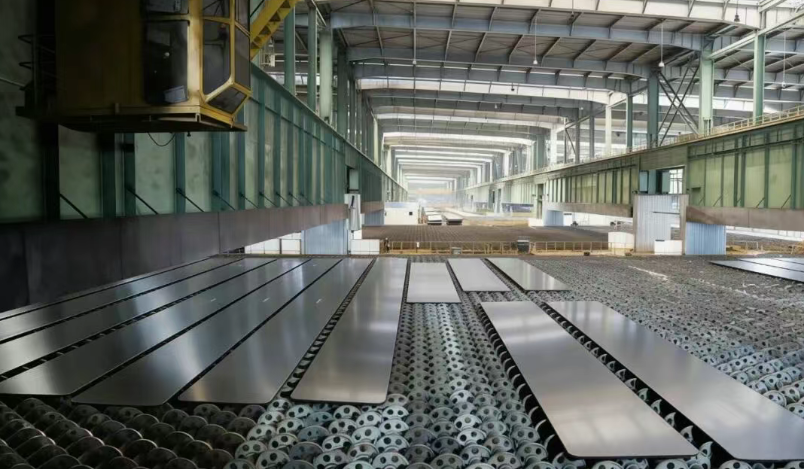
< Shanxi Jianlong Overcomes the Challenge of Achieving Surface Uniformity in the Widest and Most Demanding Specifications of High-End Galvanized Steel Strip
Read More
13/07 17:30
< On July 13, the price of stainless steel channel in Wenzhou fluctuated slightly. 316L Qingshan 16a# (160*63*6.5) 4333.56, up 14.74; 304 Qingshan 8# (80*43*5.0) 2152.04, down 29.48. (USD/ton)
Read More
13/07 17:29
< On July 13, the price of hard steel wire in Zhengzhou remained stable. 60-70# (ASTM 1060-1070) Ansteel Φ6.5 (hot rolling) 520.32. (USD/ton)
13/07 17:28
< On July 13, the price of stainless steel welded pipe in Wenzhou dropped slightly. 304 common Φ100*100*6 (rough, square tube) 2236.06, down 63.38. (USD/ton)
Read More
13/07 17:21
< On July 13, the price of hot-rolled stainless steel plates in Wuxi remained stable. 316L/NO.1 TISCO 8.0*1500*6000 (slit edge) 4422.00. (USD/ton)
13/07 17:18
< On July 13, the price of 200 series cold-rolled stainless steel coil remained stable in Foshan. 201 J1/2B Hongwang 0.6*1240*C (mill edge) 1319.23. (USD/ton)

Answers

  • What alternative materials can be used for carbon steel Q195?

    Q195 is a low-carbon structural steel. Finding a suitable alternative depends on the specific application.
    Some common alternative materials are listed below for reference only:
    Q215 has slightly higher strength than Q195, and its applications are largely the same.
    DC01 corresponds to the national standard Q195/Q215, with a tensile strength of 270-410 MPa and a yield strength of 130-260 MPa.

    When selecting an alternative material, the most crucial factor is to clearly define the specific application, processing method, and minimum requirements for mechanical properties.
    The carbon and manganese content of alternative materials may differ from that of Q195, which will affect their welding, forming, and other process properties, requiring corresponding adjustments to the manufacturing process.


  • What's the difference between stainless steel bearings and ordinary bearings?

    Bearing steel generally has a higher carbon content to enhance wear resistance, while stainless steel generally has a higher chromium content, exceeding 12%, primarily to utilize its corrosion resistance. Compared to ordinary bearings, stainless steel bearings not only have a significant advantage in material composition but also require much stricter manufacturing processes and precision control.
    The main difference between stainless steel bearings and ordinary bearings lies in their corrosion resistance; other aspects are similar.
    If the operating environment is acidic or corrosive, it is recommended to choose stainless steel bearings, as their service life will definitely be superior to that of ordinary bearings.


  • What's the difference between a material certificate and a certificate of conformity when purchasing steel. are both necessary?

    A certificate of conformity is a document issued by the steel plate manufacturer or a third-party testing agency, proving that the steel plate has undergone relevant testing and inspection, meets relevant standards and specifications, and is ready for sale.
    A material certificate is a document issued by the supplier, proving the quality and composition of the materials used in the steel plate. Through the material certificate, customers can check the specific grade, steel number, chemical composition, mechanical properties, and other information of the steel plate, thereby confirming whether the steel plate's quality meets requirements.
    Material certificates are also typically used for steel plate traceability, facilitating the identification and resolution of quality issues. Although material certificates and certificates of conformity have different meanings and functions, they are both related to the quality of the steel plate and play an equally important role. Therefore, steel plate manufacturers usually provide both material certificates and certificates of conformity simultaneously to ensure the quality, performance, and compliance of the steel plates. 


    When purchasing steel, a material certificate and a certificate of conformity are two different documents, but usually both are required as they are crucial documents for ensuring steel quality.
    The certificate of conformity is relatively simple, mainly containing basic information such as product name, model, specifications, batch number, quantity, and a "qualified" mark. Steel certificates of conformity are sometimes colloquially referred to as quality certificates.
    In addition to basic information, the material certificate details key data such as the steel's chemical composition and mechanical properties (e.g., yield strength, tensile strength). It is an important basis for understanding the steel's performance.
    The material certificate provides detailed performance data for the steel, forming the foundation for quality traceability and technical verification. For export trade, a material certificate conforming to international standards (such as EN 10204) is a core document.


Timely Info Independent Platform Multiple guarantees Self-operated storage

China Steel Market

Empowering small and medium-scale steel purchasing


How can I help you?